Advanced Orthodontics, Implants & Cosmetic Dentistry in Gangnam, Seoul · International Patient Concierge

Dental Guide
Korea vs Turkey Veneers: What US Patients Should Weigh
Korea vs Turkey veneers compared honestly for US patients: cost drivers, safety, tooth-preparation risks, and follow-up before you commit.
Schedule a ConsultationSouth Korea vs Turkey for Veneers: What American Patients Should Weigh
Medically reviewed by Dr. Hangyeol Kim, D.D.S., Chief Director, Smile View Dental Clinic · Last updated July 2026
If you are researching Korea vs Turkey veneers, you are almost certainly an American patient who has seen the price of a full smile makeover at home and started looking abroad. Both countries are heavily marketed to US travelers, and both can produce beautiful results in the right hands. This guide is meant to help you weigh the two destinations honestly, using what can actually be verified rather than promotional claims from either side.
We will be clear about which facts come from Smile View Dental Clinic in Gangnam, Seoul, and which come from independent public sources such as the American Dental Association, the CDC, and dental regulators. Where a number cannot be responsibly stated, we say so and point you toward getting a personalized quote instead of guessing.
Why American Patients Compare Korea and Turkey for Veneers
The short answer is cost, volume marketing, and the promise of a "smile transformation" trip. Dental care is the single most common reason US residents travel abroad for medical care, in part because a large share of Americans are uninsured or underinsured for dental work, according to the CDC. When several front teeth are involved, the out-of-pocket total in the United States can be significant, so a destination that combines lower prices with a vacation becomes appealing.
Turkey has built an especially large dental-tourism industry aimed at Western patients, and "veneer package" holidays are advertised widely. South Korea, and specifically the Gangnam district of Seoul, is known for cosmetic and aesthetic dentistry and for a formal government framework that designates clinics allowed to treat foreign patients. Both are legitimate options. The right choice depends on how you weigh price against oversight, travel distance, and the specific type of veneer work you actually need.
A few motivations show up again and again among US patients researching both countries:
- Lower headline prices per tooth than many US private practices
- The appeal of completing cosmetic work during a single trip
- English-speaking coordination for international patients
- Curiosity about "Hollywood smile" style results seen on social media
Being clear about your own priority, whether it is the lowest possible price, the strongest oversight, or the shortest flight, makes the comparison far easier.
What Veneers Actually Are, and the Crown Confusion
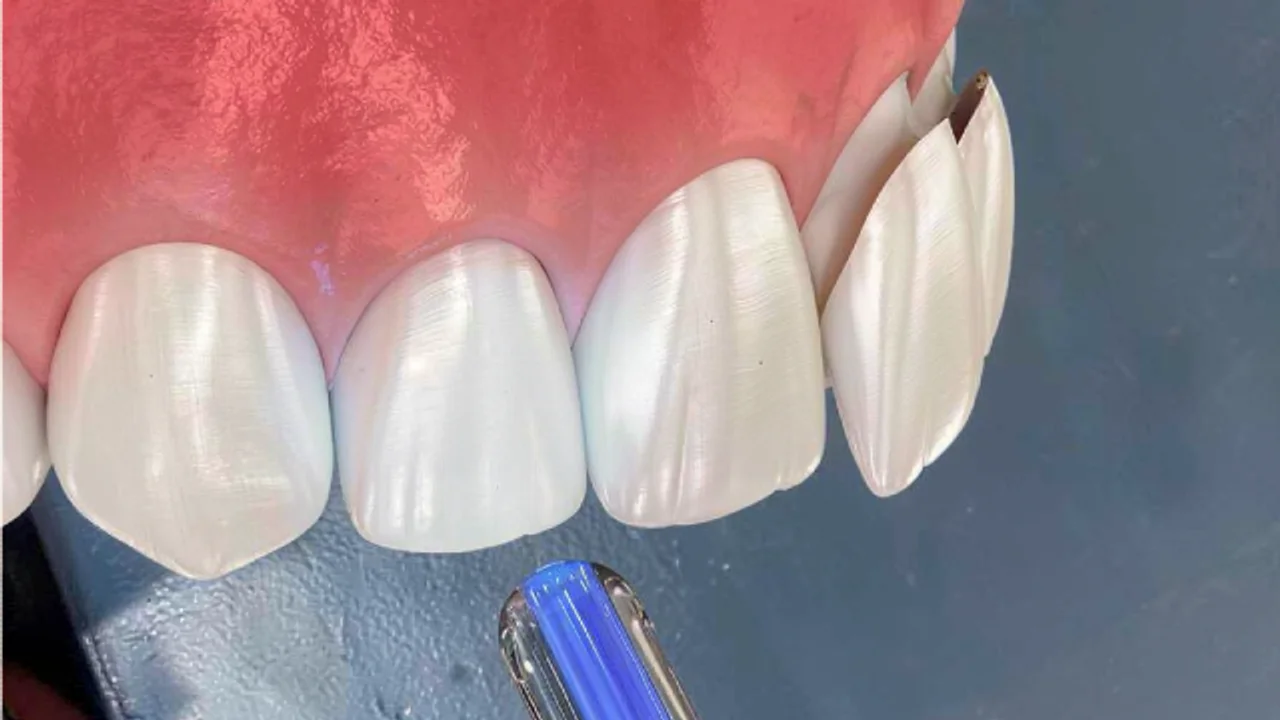
A veneer is a slim, custom-made shell attached to the front of a tooth to correct cosmetic issues such as chips, cracks, discoloration, or small teeth. According to the American Dental Association, a porcelain veneer is a thin shell custom-made to fit the front surface of the tooth, while a composite veneer is bonded tooth-colored filling material. Crucially, a veneer covers only the front surface of a tooth, not the entire tooth the way a crown does.
More Dental Articles
Continue reading our clinical dental guides.
Korean Dental Anesthesia Market: Projected $80M Revenue by 2035
In the rapidly evolving landscape of South Korean healthcare, patient comfort has transitioned from a luxury to a baseline expectation.
Learn More

Why Non-Surgical Orthodontics Reduces Long-Term Dental Costs
The landscape of dental care in South Korea is shifting rapidly as patients increasingly prioritize long-term functional health over quick aesthetic fixes.
Learn More

Comparing Orthodontic Treatment Fees: Korea vs Japan Benchmarks
The decision to pursue orthodontic treatment is a long-term investment in both oral health and facial aesthetics. For patients in the Asia-Pacific region, South Korea and Japan represent the two most prominent hubs for advanced dental care.
Learn More