Advanced Orthodontics, Implants & Cosmetic Dentistry in Gangnam, Seoul · International Patient Concierge


Dental Guide
How TMJ Affects Your Bite and Face Shape
Discover how TMJ affects your bite and alters your face shape. Learn the signs, causes, and treatments to restore comfort and symmetry—start here!
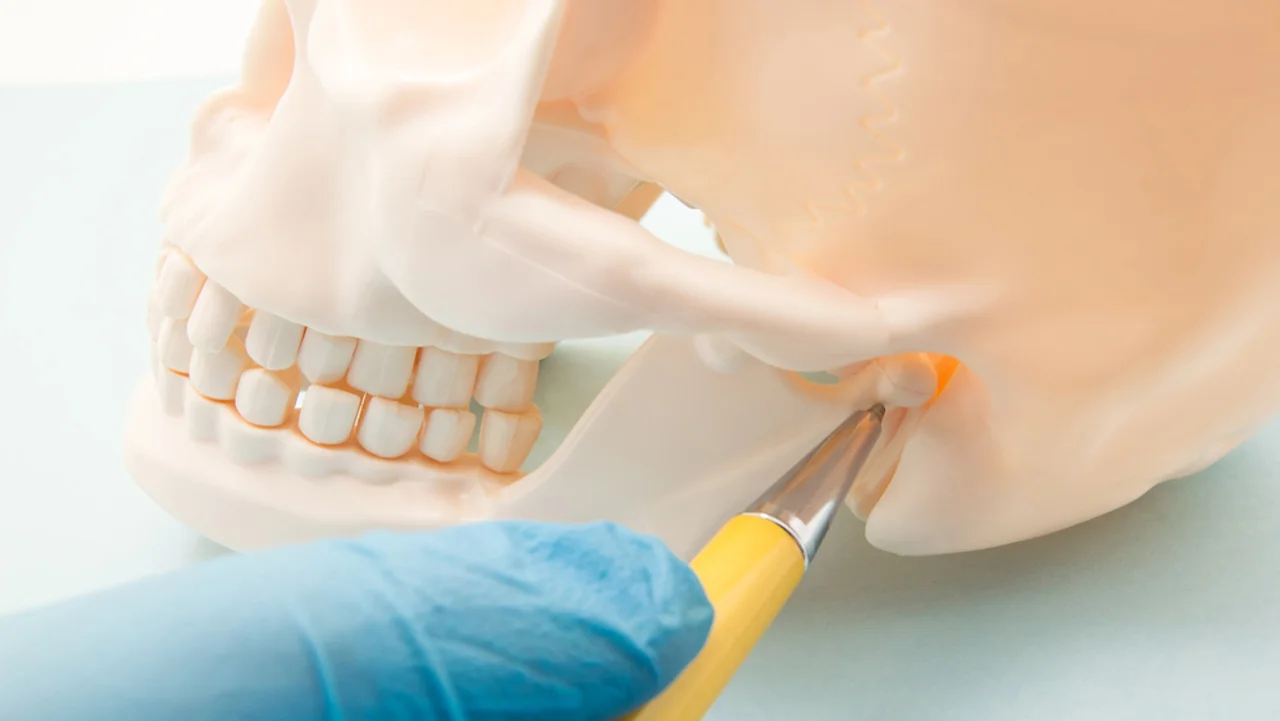
Schedule a ConsultationIntroduction\n\n \n\nAt Smile View Dental Clinic in Gangnam, we often see patients who come in with a very specific concern: "My face looks uneven," or "My smile feels off." Interestingly, not all of them complain of pain or discomfort in the jaw. What many don’t realize is that these subtle changes in appearance and bite are often linked to an underlying issue with the temporomandibular joint (TMJ).\n\nThis joint, though small, plays a monumental role in the way your face looks and functions. From bite alignment to jawline definition, the TMJ affects far more than you might expect. This article explores how dysfunction in this joint can lead to noticeable aesthetic and structural changes—and what you can do about it.\n\n## Understanding the TMJ: More Than Just a Hinge\n\nThe TMJ is the joint that connects your jawbone (mandible) to your skull, allowing you to chew, speak, yawn, and move your jaw in multiple directions. It’s one of the most complex joints in the body due to its range of motion and interaction with the surrounding muscles and ligaments. When functioning properly, you barely notice it. But when something goes wrong, the ripple effects can be surprisingly broad—from chronic headaches and jaw tension to bite misalignment and visible changes in your facial structure.\n\nEach TMJ is cushioned by a small disc of cartilage that allows smooth movement and absorbs shock. However, when this disc shifts out of place or the surrounding muscles become tense or inflamed, it leads to what is commonly known as temporomandibular disorder, or TMD. Patients with TMD may experience a range of symptoms, including jaw clicking, restricted motion, ear pain, and even migraines. But the effects don’t stop there.\n\n## What Happens When the TMJ Is Misaligned?\n\nWhen the TMJ becomes inflamed, displaced, or overworked, it can lead to a disorder known as TMD (temporomandibular disorder). One of the most overlooked consequences of TMD is its impact on occlusion (how your upper and lower teeth fit together when you bite) and, over time, the shape of your face.\n\nYou might be surprised to learn that the alignment of your jaw plays a critical role in your overall facial harmony. In fact, the muscles that control your jaw movement are also responsible for supporting the lower third of your face. When the TMJ isn’t functioning properly, these muscles may become overused on one side or underused on the other, leading to facial asymmetry, sagging, or even a more aged appearance.\n\n## TMJ and Bite: A Subtle Shift with Big Consequences\n\nHere are some bite-related complications we often see in TMJ patients:\n\n- Overbite or deep bite development\n\n
 \n\n
More Dental Articles
Continue reading our clinical dental guides.
Korean Dental Anesthesia Market: Projected $80M Revenue by 2035
In the rapidly evolving landscape of South Korean healthcare, patient comfort has transitioned from a luxury to a baseline expectation.
Learn More

Why Non-Surgical Orthodontics Reduces Long-Term Dental Costs
The landscape of dental care in South Korea is shifting rapidly as patients increasingly prioritize long-term functional health over quick aesthetic fixes.
Learn More
Comparing Orthodontic Treatment Fees: Korea vs Japan Benchmarks
The decision to pursue orthodontic treatment is a long-term investment in both oral health and facial aesthetics. For patients in the Asia-Pacific region, South Korea and Japan represent the two most prominent hubs for advanced dental care.
Learn More