Advanced Orthodontics, Implants & Cosmetic Dentistry in Gangnam, Seoul · International Patient Concierge


Dental Guide
Early Orthodontic Treatment: What Are the Real Benefits?
Discover the real benefits of early orthodontic treatment for kids. Improve smiles, prevent issues, and save on future care. Learn more today!
Schedule a ConsultationIntroduction\n\n \n\nIt’s a question we hear time and again: "My child is only seven. Should we really be thinking about orthodontics already?" For many parents, the idea of starting braces or orthodontic appliances before all the adult teeth have come in feels premature. After all, aren't braces something you do in middle school?\n\nAt Smile View Dental Clinic in Gangnam, Seoul, we approach this question not with a one-size-fits-all answer, but with careful evaluation, experience-driven insight, and a deep respect for how children grow and develop. Early orthodontic treatment, often referred to as interceptive orthodontics or Phase I treatment, can offer real, measurable benefits—but only when applied thoughtfully.\n\nSo, what exactly are the benefits of early orthodontic care? When is it necessary, and when might it be avoided? Let's explore how early treatment can not only improve smiles, but support healthier growth, better function, and more confident lives.\n\n## Understanding Early Orthodontic Treatment: More Than Just Straight Teeth\n\nEarly orthodontic treatment typically begins between the ages of 7 and 11—before all permanent teeth have erupted. It’s designed not to "finish" the orthodontic journey early, but to lay the foundation for a healthier, more stable outcome later. Often, this stage includes interventions such as palatal expanders, space maintainers, partial braces, or habit-correcting appliances.\n\nAt this age, children's jaws are still developing. That means orthodontists have a unique opportunity to guide bone growth, influence eruption patterns, and correct functional issues before they evolve into more complex problems.\n\nIn short, early orthodontics isn’t just about making teeth look better—it’s about supporting your child’s long-term health.\n\n## Why Timing Matters: The Biology Behind Early Intervention\n\nYou might be surprised to learn that by the age of seven, orthodontic issues are often already visible—even if adult teeth haven’t fully come in. Malocclusions (bad bites), crowding, crossbites, overjets, and jaw discrepancies can all be detected early with a thorough examination and imaging.\n\nWhy is this timing so critical? Because the upper jaw is most malleable before age 10. By intervening while bones are still growing, orthodontists can correct issues with gentle, non-invasive methods that may no longer be possible—or may require surgery—once growth slows.\n\n## The Real Benefits of Early Orthodontic Treatment\n\nLet’s explore the core benefits parents should understand when considering early orthodontic intervention.\n\n
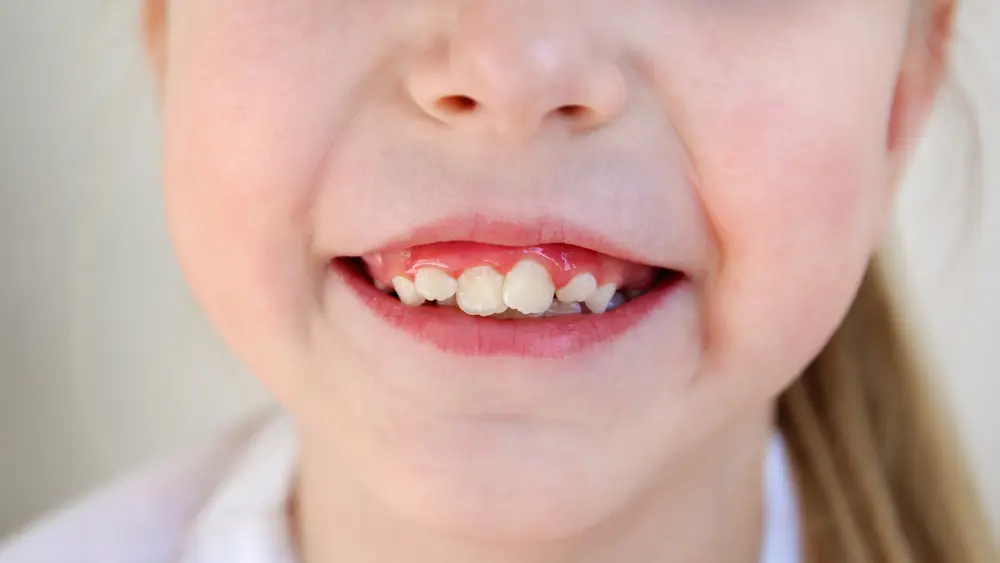 \n\n- Severe crowding\n\n
More Dental Articles
Continue reading our clinical dental guides.
Korean Dental Anesthesia Market: Projected $80M Revenue by 2035
In the rapidly evolving landscape of South Korean healthcare, patient comfort has transitioned from a luxury to a baseline expectation.
Learn More

Why Non-Surgical Orthodontics Reduces Long-Term Dental Costs
The landscape of dental care in South Korea is shifting rapidly as patients increasingly prioritize long-term functional health over quick aesthetic fixes.
Learn More
Comparing Orthodontic Treatment Fees: Korea vs Japan Benchmarks
The decision to pursue orthodontic treatment is a long-term investment in both oral health and facial aesthetics. For patients in the Asia-Pacific region, South Korea and Japan represent the two most prominent hubs for advanced dental care.
Learn More